
Content
LIVING IN MARYLEBONE

Marylebone Is The Home Of ...
In the area, you will find:
Why live in Marylebone
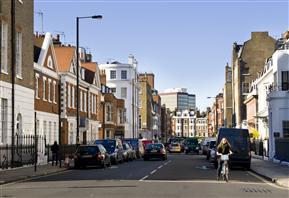
Marylebone is situated in the heart of central London and is home to many attractions, shops, bars and restaurants. Marylebone High Street, often now known as Marylebone village, was voted “London’s favourite street” in a nationwide survey carried out by BBC Radio 4.
The area has become increasingly popular with city workers, with excellent commuting links to the city and Canary Wharf. The proximity to the West End, with its 24-hour party atmosphere, also makes Marylebone highly desirable.
History of Marylebone
11th century beginnings
The history of Marylebone can be traced back to 1086. In 1538 King Henry VIII created a Royal Hunting Park beside Marylebone, which is now called Regent’s Park.
Urbanisation
Until the early part of the 18th century, much of Marylebone was still covered by fields and farms. However a number of architects developed the area over time, including John Prince (who built Cavendish Square in 1719), Robert Adam (Portland Place, 1770), and John Nash (Regent’s Park, 1811).
The Home of Private Practice
The well-known Harley Street, famous for its large number of private dentists, surgeons and doctors is on the Howard de Walden Estate. Its name is synonymous with private medical care in the UK. Today, more than 3,000 people are employed in the private hospitals, clinics and medical practices of Harley Street and the surrounding area.
Property types
Georgian terraces, Impressive mansion blocks
Places of Interest
For more information:
Try the free Marylebone Journals, available from many local shops, cafes, hotels, bars and restaurants - click here.
Marylebone Local Authority
Getting to Marylebone
Trains: Marylebone Station (to destinations including Aylesbury, High Wycombe, Banbury, Leamington Spa, Warwick, Stratford-upon-Avon and Birmingham)
Underground: Baker Street (Bakerloo, Jubilee, Hammersmith, District and Circle lines)
Marble Arch/Bond Street (Central line).
